May 19, 2006

Jewish Chronicle takes on the Holocaust Industry

I don't know how long the JC has been running a "subscription free" zone but I've only just discovered it. Here's today's front page.


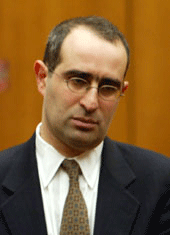
The man on the left earns $437,811 a year handling Shoah claims. So why are so many survivors pleading poverty?
19/05/2006

By Jenni Frazer and Simon Rocker


This story is from www.thejc.com – the website of The Jewish Chronicle Newspaper.

The international body primarily responsible for distributing compensation to Holocaust survivors is under pressure to explain its spending policies and the remuneration of its officials.

Writing in today’s JC, British academic Michael Pinto-Duschinsky questions the salaries paid by the New York-based Conference on Jewish Material Claims Against Germany to its senior staff. In particular, he highlights the $437,811 (£240,000) in salary and pension awarded to its highest-paid official, executive vice-president Gideon Taylor, according to the latest available figures from 2004, revealed for the first time today by the JC.

Dr Pinto-Duschinsky, who advised British survivors in compensation claims in the 1990s, insisted: "It is wrong for the executive vice-president to earn annually the same as the compensation for several hundred former slave labourers. The moral authority of the leading Jewish organisations is gravely weakened by excessively high salaries for top officials."

Another veteran campaigner on behalf of Holocaust survivors, London businessman Martin Stern, said: "The salaries are not commensurate with the figures which are being paid to the people who suffered."

But Abe Biderman, chairman of the Claims Conference’s personnel and management committee, said the salaries were "at and below the equivalent salaries of comparable Jewish organisations." A large part of the senior staff salaries were reimbursed "from funders of the programmes administered by the Claims Conference." Total administrative expenses, he said, were less than 2.5 per cent of funds distributed in 2004.

There has been criticism, too, of the way the Claims Conference spends money on funding educational and "remembrance" programmes when many believe that the increasing needs of ageing survivors are not being met. The committee in charge of the allocations meets in New York next Monday to decide on the next cycle of distributions.

Chief among the critics, remarkably, is the treasurer of the Claims Conference, Roman Kent, who told the JC: "Survivors are suffering. Our only priority should be the survivors, and everything else should be secondary. We are spending money for thousands of projects, but the health of the survivors can't wait. They are dying daily." Mr Kent, himself a survivor, added: "I'm not saying that these are bad programmes, but they can wait - or else they should be the responsibility of the world Jewish community, not the Claims Conference."

Mr Stern agreed. Querying whether the Claims Conference should be making £9.1 million of grants to educational organisations rather than to survivor care, he pointed out: "At the moment in Israel alone, we have a 65 million shekel shortfall (£7.8 million) in home care for aged Holocaust survivors who are ill. That should be a priority."

In a separate controversy, New York lawyer Professor Burt Neuborne has applied for $4.1 million in fees - charging $700 an hour — for work he did in applying a complex $1.2 billion legal settlement against the Swiss banks.

Some Holocaust survivor organisations in the US have filed an objection to Professor Neuborne's claim, suggesting that he had announced that he was ready to work pro bono (free). Leo Rechter, of the National Association of Jewish Child Holocaust Survivors, called the fees claim "a mockery" and "tragicomic."

But an angry Professor Neuborne told the JC that the criticism was "absolutely unwarranted," insisting that he had waived a $10 million fee for securing the settlement, and that he had put in "seven years and 8,000 hours to make the settlement work. It is a flat-out lie that I said I would do [the latter] work pro bono. The criticism is truly disgraceful."

Claims Conference executive vice-president Gideon Taylor told the JC that there were "two schools of thought" on the allocation of restitution funds. "One says all the money should be used entirely for social welfare needs

"The other says that this is money from those who perished, not from those who survived and that we need to acknowledge and remember those who died.

"Holocaust education is important for future restitution negotiation. The obligation to meet the needs of victims of Nazi persecution is not just that of the Claims Conference, but that of the entire Jewish community. The Jewish world also has to balance its priorities."
The leader comment (also sub free) is here and it's more fascinating than the front page.
The compensation gap

Why is the Jewish Chronicle today giving space to a debate that will make many of our readers instinctively flinch? How could a responsible Jewish newspaper raise questions on sensitive matters that will be seen to offer succour to this community’s enemies? And why, when there are far bigger challenges facing British Jewry, are we appearing to point fingers at a small number of individuals serving in respected and senior roles in well-established institutions mostly based thousands of miles away? Our readers deserve a few answers. When we were presented with some recent salary figures relating to organisations established to further the interests of Holocaust survivors, we were surprised, to say the least, that these apparently generous salary-and-benefits packages had gone unremarked in normally vigilant serious newspapers, both here and overseas. When, further, we discovered the wider pattern of remuneration in the larger, Holocaust-related charities, we became deeply curious. Some of these organisations, whose mission it is to negotiate and distribute compensation for Nazi-era crimes to Holocaust survivors, seemed at the same time to be compensating their own top people somewhat generously, to say the least. And yet… by even choosing to question how these salaries could be justified, when survivors themselves have each typically received only a few thousand pounds, we knew that we would risk causing offence not merely to those banking the paycheques, but to senior communal leaders and a significant part of our readership. So let us explain why, after a great deal of thought and discussion, the JC today questions whether those working to represent survivors’ interests are being as accountable and transparent as they should about the manner in which they distribute their own resources internally.

In highlighting the gross disparity between survivors’ compensation and the pay of those working for them, we are not suggesting in any way that these salaries in themselves are being paid at the expense of monies disbursed to those still burdened with memories of atrocities six decades ago. But we do want to see an honest and informed debate about whether resources are being distributed fairly and openly by those in positions of power. Our concern lies with the survivors, now elderly and often impoverished people whose personal circumstances, in many cases, would shame those of us who profess to care about our fellow Jews. For most of the 700 or so survivors thought to be living in the UK, life is relatively good: they have a National Health Service and in many cases live among warm and generous families and benefit from social support networks. But some of those living in Israel or the United States are facing real hardship in their declining years. As their needs for support and healthcare grow, shouldn’t we all, as a global community of Jews, be anxious to ensure that these welfare needs are met?

The Claims Conference needs to clarify not simply its scale of salaries — which, in the scheme of things, is of limited significance — but how it allocates its funds. With survivors now typically in their 70s and 80s, ought it not to be thinking seriously of freezing those of its programmes which do not directly relate to survivors’ welfare? The Claims Conference should focus on the essential work for which it was set up — looking after survivors. Dr Michael Pinto-Duschinsky, in drawing attention to the disparity between the salaries (and benefits) of some officials and survivors’ restitution, will be accused of making false comparisons. Unlike him, we are not asking executives to take salary cuts simply to demonstrate good faith. However, if they are to retain the trust and respect of the wider Jewish world, they will need to reinforce public confidence that the survivors’ immediate interests are at the heart of their mission. And if our readers have the survivors’ interests at heart, they will join us in our call for transparency and accountability. After the enormous negotiation successes of the mid-1990s, perhaps there has been a sense that the restitution battle has been won. But, for many survivors, the struggle is far from over. As for the criticisms likely to be addressed to this newspaper for putting these matters on the agenda: we are sensitive to these concerns, but see our larger responsibility as one of casting light and spurring debate.
And here's a word from a child survivor (who survived thanks to Rudolph Kasztner):
In the 1990s, I worked for several years with Holocaust survivors in London - former slave labourers of German corporations in Auschwitz and elsewhere - in their quest for compensation and, more importantly, an admission of legal guilt by the corporations themselves. As a baby of 12 months, I had been lucky enough to escape deportation to Auschwitz from a staging camp north of Budapest. I was a member of one of only 20 families (out of 17,000 people who had been rounded up) who had been ransomed as part of the controversial Kastner negotiations with the Nazis.

The campaign by British Holocaust survivors, led by Rudi Kennedy, Roman Halter and other members of Claims for Jewish Slave Labour Compensation, was a sad failure. They were badly let down by senior Jewish organisations, by the Israeli authorities, and by class-action lawyers in the US. The payments achieved for former slave labourers at Auschwitz and other camps are far smaller than the pensions of SS guards. The German companies which had used their slave labour were not obliged to recognise their legal responsibility. Nor were they obliged to release documents about their wartime roles. Deutsche Bank, Volkswagen and Bertelsmann have all refused to provide me with such access.

One complaint of the survivors was that the organisation which had the formal responsibility of representing them - the New York-based Conference on Jewish Material Claims Against Germany - was more interested in trading in heirless properties in what had been East Germany than it was in pressing their case. In particular, there was a complaint that the head of the German office of the Claims Conference, now dead, had become too closely associated with the German authorities, who were ultimately responsible for providing his salary.

We never managed to find out how much he was paid. Yet it turns out that information about Claims Conference salaries - a closely guarded secret - is now publicly available, if only to those willing to explore deep inside a vast online database of charities’ finances. Spend a little time in the Guidestar database (www.guidestar.org) and you can download annual returns submitted by US-registered charitable bodies like the Claims Conference. Deep within its latest entry, you can find the salaries of its officers and of its five highest-paid staff.

This information is, for me, pretty devastating. In 2004, the executive vice-president of the Claims Conference took a salary of $360,000 plus nearly $80,000 in pension payments (£240,000 at today’s rates). This compares with the maximum £6,000 compensation for years of slave labour in Auschwitz for a survivor. Considering that the compensation was paid 55 years late, it actually was worth far less - a few hundred pounds when compound interest is taken into consideration.

I appreciate that there are good arguments for the view that the high salaries of top officials of organisations concerned with the Holocaust are (a) justified, (b) do not matter, or (c) ought in any case to be kept confidential. On balance, I am unconvinced by them. I hope that these officials will consider taking significant salary cuts in the interests of the Jewish community.

First, there is the matter of accountability and transparency. It emerges that even Claims Conference board members were unaware of the salaries and benefits of senior staff. Certainly, the Board of Deputies has been unaware of them, even though it sends two representatives to sit on the New York board on behalf of Anglo-Jewry. At the World Jewish Congress, secrecy has gone hand in hand with financial controversy. The WJC is riven by accusations and legal writs, and received a severe reprimand this year from Eliot Spitzer, the attorney-general of New York State. Does the Claims Conference wish to be weakened amid similar accusations of secrecy and controversy?

Second, the salary issue does matter. The moral authority of the leading Jewish organisations is gravely weakened by excessively high salaries for top officials. Even though the Claims Conference devotes less than 3 per cent of its spending to administration, there needs to be some correspondence between the amount of compensation for each survivor and officials’ pay. It is wrong for the executive vice-president to earn annually the same as the compensation for several hundred former slave labourers.

The argument that “you get what you pay for” is invalid. Those engaged in public service should not expect the same financial rewards as those at the top of the commercial and professional trees. A sense of mission and duty is called for in those accepting leadership roles in the community. They should be paid reasonably but not so handsomely that doubts arise about their motives.

This applies with special force to organisations involved in aiding Holocaust survivors. Potential donors need the assurance that the bodies receiving their charitable gifts are transparently run by officials motivated by a sense of dedication.

Finally, what of the argument that Jews ought to refrain from publishing criticisms - even in the Jewish press - of leaders of Jewish organisations? I am painfully aware of the fact that Holocaust denial and far-right websites avidly reproduce such discussions. But self-censorship can be taken too far and can prevent the mature discussions that are needed for the well-being of Jewry. I believe that the Jewish Chronicle is performing a service by reporting the facts that will set in motion a sensible and productive debate about the management of the institutions responsible for representing Holocaust survivors and for safeguarding the memory of the unique crimes committed by the Nazis.

Dr Michael Pinto-Duschinsky, senior research fellow at Brunel University, has written and lectured widely on the financing of political and public bodies
So, a remarkable edition of the Jewish Chronicle and possibly a personal statement by the new editor: Jeff Barak. So what was all that fuss about Norman Finkelstein then? Perhaps it's the way he tells them.

Sanctions against Israel, not Israel's victims

Here's a Guardian comment by Ronnie Kasrils and Victoria Brittain on why the sanctions now being inflicted on the Palestinians by all of the west's powers should instead be imposed on the State of Israel. One piece in particular leapt out at me:
Never in the long struggle for freedom in apartheid South Africa was there a situation as dramatic as in Palestine today: even though children were killed for resisting a second-class education; the liberation movement's leaders were locked up for decades on Robben Island; new leaders were assassinated; church leaders were poisoned; house demolitions and forced removals were frequent; and western governments told South Africans who their leaders should be, and what their policies should be.

The African National Congress confronted the military, economic and social power of white rule with a small guerrilla army, the mass support of the people and a moral authority that won it a following among millions around the world. Many now forget that the abhorrent apartheid system was treated as normal in the powerhouses of the world: entrenched interests meant the western media produced a sanitised version of its suffering and injustice.
So all the oppression that made apartheid South Africa a pariah state is present in Israel's case, together with the support the oppressors had from western governments, only this time it's more intense according to a man who knows. At the end of the comment the Guardian tells us:
Ronnie Kasrils was head of intelligence in the African National Congress's armed wing and is now South Africa's intelligence minister;
But it has to point out that he is writing in a personal capacity because, to its shame, South Africa has special economic ties to Israel.

Anyway, here's the gist of Kasrils and Brittain's argument:
The Palestinians are having sanctions imposed on them for their political choice. But it is Israel, creating new facts on the ground to prevent the emergence of a viable Palestinian state, that should be facing UN sanctions. The UN secretary general, Kofi Annan, should use his last months in office to call for sanctions to bring about the implementation of the ICJ ruling on the Israeli wall, the closure of West Bank settlements and the release of Palestinian political prisoners. And those who care for freedom, peace and justice must build a global Palestine solidarity movement to match the anti-apartheid movement of the 1980s.
Now read on.

The Jewish Question?

How Jewish is Israel? by Tony Karon in today's Ha'aretz.
If we concede A.B. Yehoshua's claim that Israel is the source of Jewish identity in today's world, we reduce Jewish identity to a conversation between anti-Semitism and a blood-and-soil nationalism that is Jewish only in the sense that anti-Semites use the term i.e., racial. But if, instead, we define "Jewish" on the basis of the universal ethical challenges at the core of Judaism, then not only is the Diaspora an essential condition of Jewishness, but Israel's own claim to a Jewish identity is open to question.

The idea that the modern State of Israel expresses some ageless desire among Jews across the Diaspora to live in a Jewish nation state is wishful thinking. Before the Holocaust, Zionism had been a minority tendency among Western Jews, and scarcely existed among those living in the Muslim world. And a half century after Israel's emergence, most of us choose freely to live, as Jews have for centuries, among the nations. That choice is becoming increasingly popular among Israeli Jews, too: 750,000 at last count - hardly surprising in an age of accelerated globalization that feeds dozens of diasporas and scorns national boundaries.
For a post on AB Yehoshua see here.

May 18, 2006

Lenni, the Lobby and the lobby system

Here's Lenni Brenner in Counterpunch, critiquing the New York Times's approach to the Israel Lobby article by Mearsheimer and Walt. Brenner raises an issue in this that no one else seems to have raised, publicly anyway. It's the lobby system itself and M & W's (and their conservative/"realist" supporters') refusal to confront it.
Naturally Mearsheimer and Walt point to this. Jews "make large campaign donations to candidates from both parties. The Washington Post once estimated that Democratic presidential candidates 'depend on Jewish supporters to supply as much as 60 percent of the money.'" But they present no notion of how to stop this. As old-cons, they don't call for abolition of private election funding.

This is a basic difference between "realism" and leftism. But this is also the core distinction between the Times and radicalism. In 1999, New York's other Senator, Charles Schumer, made a Senate speech:

"We have a tremendously serious problem. We have a poison that is in the roots of this great tree of democracy.... That poison is cynicism. That poison is a view of the average citizen, rightly or wrongly -- and in many cases, it is right -- that the average person doesn't have the influence of a person or a company or a group of great wealth.... [I]f we can no longer have the citizens believe, when this body debates an issue, that the debates are being divided by firmly held beliefs rather than by who is manipulating, controlling, or contributing to whom, then we can't survive as a democracy. That fatal distance between people and their government will get larger and larger and larger."

With readers sharply aware of local and national corruption, Times chief editorialist Gail Collins constantly takes up reform. On 5/6, she warned us yet again re congress: "There's also no reason to believe that the average lawmaker has any real intention of following even the extremely modest ethics improvements that do make it into law."

But she never mentions Zionist contributions. These aren't a state secret. Major pro-Zionist 'Jewish community' journals, Forward and Jewish Week, run detailed accounts of them. Jews are only two percent of Americans. Zionists admit that they are an ever shrinking minority of that two percent, and the rich who put money into the hacks' pockets are a minority among Zionists. How serious can the Times be about campaign reform if it never editorially confronts this egregious example of a moneyed minority of a minority of a minority corrupting both parties?

Indeed, this is in keeping with Times general hypocrisy about money in politics. For all of Collins' wearisome sarcasm re politicians, at election time the Times lists the local Democrats and occasional Republicans it wants readers to vote for. The winners among them are a huge percentage of those crooked average lawmakers Collins whines about.

The wide discussion of Mearsheimer and Stephen Walt's policy paper, including the gingerly Times take, tells us that most pro-capitalist intellectuals see Bush in deepening trouble throughout the Middle East. So they debate who to blame for getting us into these wars, without making the slightest effort to build a movement to get the US out of them.

Still, we thank the profs, Zionists and the Times. The academics succeeded in mainstreaming critical discussion of the lobby. But their approach is so narrow that it almost forced Zionists to respond by shouting about how, well and truly, the US is imperialist. And the Times' failure to editorially draw even one conclusion from a discussion in its own pages, much less call for a new policy towards Zionism, focuses us on cleaning up the antiwar movement's own act.
Lenni Brenner is the editor of Jefferson & Madison on Separation of Church and State: Writings on Religion and Secularism and a contributor to The Politics of Anti-Semitism. He also edited 51 Documents: Zionist Collaboration with the Nazis. He can be reached at BrennerL21@aol.com.

May 17, 2006

Free Palestine on Saturday 20th May

From the Respect site:
Palestine Demonstration 20th May 2006

EU/Israel - Stop Starving Palestinians
Recognise Palestinian Democracy
End Israel's Occupation

DEMONSTRATE Saturday 20 May
Assemble 12noon, Embankment
Rally in Trafalgar Square

Organised by Palestine Solidarity Campaign, Palestinian Forum in Britain, Association of Palestinian Communities, Palestine Return Centre, British Muslim Initiative, Friends of Al-Aqsa, Stop the War Coalition

Supported by Just Peace UK, Jews for Justice for Palestinians, Muslim Association of Britain, Pax Christi, Freedom and Justice for Samar and Jawad, Arab Media Watch, War on Want, RMT, Unison, GMB, NUM, CWU, NUJ, PCS, NATFHE,  1990 Trust

Details: www.palestinecampaign.org

The Palestinian people need your help Israel's brutal occupation of the Palestinian people is creating a humanitarian crisis.

The Israeli government has decided to strengthen the economic blockade of the Palestinian people. Dov Weisglass, the Israeli prime minister's adviser, joked: 'It's like an appointment with a dietician. The Palestinians will get a lot thinner, but won't die'.

a. According to a January 2006 UN report, 64% of Palestinians in the Occupied Territories are living below the poverty line.

b.. In Gaza, 40% of children suffer from malnutrition because of the Israeli occupation. John Ging, director of UN operations there, said: 'This is the first time bread has been rationed.There's no sugar, oil, milk, the basics.'

c.. A UN report in September 2005 said that 60 Palestinian women had given birth at Israeli checkpoints since 2000 and 36 of their babies died as a result.

d.. Since September 2000, over 3,800 Palestinians have been killed by the Israeli army and settlers, and over 29,000 injured.

e.. Israel is building an Apartheid Wall that, when completed, will annex East Jerusalem and almost half of the West Bank, leaving the Palestinians imprisoned in a series of ghettos.

f.. Over half of the Palestinian population were expelled from their homes in the 1947-49 war, and a second wave of refugees was created in 1967. Today, two-thirds of Palestinians are refugees.

Israel must:

a.. abide by international law
b.. acknowledge Palestine's right to exist
c.. recognise the democratically elected government of Palestine
d.. end the illegal occupation
e.. remove settlers
f.. dismantle the Apartheid Wall
Help us send a clear message - write to your MP and MEP for support

Also posted to Lenin's Tomb

Stryngs at Stonewalls - 28/5/2006

Stryngs are appearing at Stonewalls on 28/5/2006 or 5/28/2006 if you're flying in from America. It's the launch gig for their album Love and other vices.

Stonewalls is at 286 Lewisham High Street, LONDON, SE13 6JZ. Nearest station, Lewisham, BR and DLR.

Cost: watch this space!

Starts 8pm.


Their site is here, their sounds are here and Stonewalls is here. But what is extreme psychiatry?

Israel's nazis

This story was brought to my attention a little while ago. It's about neo-nazi activism in Petah Tikva in Israel. I got this from the World War 4 report but it first appeared in Ha'aretz.
A week after the desecration of the Great Synagogue in Petah Tikva, nothing remains of the horror the worshipers encountered there last Thursday when they arrived for morning prayers. The walls, which had been sprayed with swastikas and blasphemy, have been newly painted, the floor polished and the curtain covering the holy ark replaced.

However, the danger is far from over. For the past two years the ultra-Orthodox community there, which includes some 5,000 families and 300 synagogues, has been subjected to incessant attacks by street gangs from the former Soviet Union (FSU). The gangs have been beating ultra-Orthodox men, hurling curses at them and desecrating synagogues.

"These youths feel out of place in the Russian community they belong to, but they are not accepted in Israeli society either," says Bella Alexandrov, the director of the multi-disciplinary youth center in Petah Tikva. She distinguishes between two kinds of immigrants - punks and skinheads.

"The skinheads buy Russian videos about 'white power' that call for cleansing Russia of Jews. They don't get it from home. It comes from not belonging and not finding answers to their distress."
I posted on this subject back in June last year. At the time it surprised me that Israel had no law against antisemitism.

May 16, 2006

More Nakba thoughts and memories

This is from the Institute for Middle East Understanding. It rounds up a project of interviewing various Palestinians about the expulsion and what it means to Palestinians today and what it should mean to Americans. There are various contributions, this one's from Diana Buttu in response to the question "When you reflect on the 58th anniversary of the Nakba, what comes to mind?"
As a child of a Nakba survivor, I am haunted by the image of thousands of Palestinians fleeing to safety and I am left wondering what the Palestinians were living through that would make them flee their homes for safety. As a resident of Gaza, the daily Israeli shelling and frequent bombing raids have terrorized me. And, while I have often thought of leaving, I remain, as do most Palestinians. In the height of these bombing campaigns, I often think back to the Nakba and convince myself that I can live through it.

A dear Jewish friend of mine once told me that her mother was haunted by the faces of the people who idly watched her get on a truck that shipped her off to a concentration camp. I, too, am often left wondering what the watchers-by were thinking in 1948. More hauntingly, however, I am left wondering whether Israelis ever think that their state, which is supposed to be a haven for Jews, caused the dispossession of so many Palestinians. Have they not become the people who idly watched the Palestinians get on trucks?

And to the question "Why should Americans care about the Nakba, 58 years later?"
The unconditional support provided to Israel, in the face of Israel's continued dispossession of the Palestinians, is the source of much of the discontent towards the United States in the Middle East. Arabs see the double standards in U.S. foreign policy: while the U.S. advocates (and even fights for) the return of Bosnian and East Timorese refugees, Palestinian rights are extinguished by the U.S.; while the U.S. claims that it supports civil rights, the U.S. also supports a state that advocates superior rights for a certain class of people; while the U.S. is opposed to the taking of property without compensation, it supports regime after regime in Israel who make no secret of the fact that they have stolen property in the past and will continue to do so in the future. This unresolved issue will continue to serve as problem for Israel and the U.S. for another 58 years unless a just resolution is achieved.
The site homepage is here.

New balance at BBC?

I've just noticed this BBC report on an Israeli rocket attack on a car in Gaza.
Israel targets car in Gaza Strip

The Israeli air force says it has attacked a car carrying a group of Palestinian militants in southern Gaza.

The Islamic Jihad armed group said those in the vehicle were its members. Doctors said two people were injured.

The Israeli military frequently launches such air strikes, saying they are an attempt to combat Palestinian rocket attacks launched from Gaza.

But Palestinian militants counter that their rocket attacks are in retaliation for Israeli military action.

The blast happened near the Khan Younis refugee camp.

It came as Palestinians marked the anniversary of the creation of the state of Israel in 1948 - a day the Palestinians mourn as the "Catastrophe" or al-Nakba.
The BBC has recently been exposed as being too pro-Israel in its coverage so what is noticeable about this report is that, whilst it puts Israel's claim of retaliation first, it does follow with Islamic Jihad's claim that it is the Palestinians who are retaliating. The Beeb could say more about the comparative strength of Israel against the Palestinian resistance but there might a little acorn here.

May 15, 2006

Ghada Karmi remembers the Nakba

Here's Ghada Karmi in today's Guardian, commemorating the Naqba, the catastrophe that befell the Palestinians when Israel was established amid the ethnic cleansing of most of the Arab population of what became Israel in 1948. The headline puts the question, "Where is the global outcry at this continuing cruelty?"
Israel is 58 years old today. Israelis have already celebrated with barbecues and parties. And so they should, for they've pulled off an amazing stunt: the creation of a state for one people on the land of another - and at their massive expense - without incurring effective sanction. Some of those not celebrating, the Arab citizens of Israel, were also there, demonstrating to remind the world that Israel displaced 250,000 to take their land without compensation. Millions more Palestinians will demonstrate today in the refugee camps of Gaza, the West Bank and neighbouring Arab states against their expulsion by Israel. The world, however, is not listening, any more than it did in 1948, when most of Palestine's inhabitants were expelled to make way for Jewish immigrants.

My family was among those displaced and, though a child, I vividly remember the panic and misery of that flight from our home in Jerusalem on an April morning in 1948, with the scent of spring in the air. Palestine by then had become a raging battleground as Jews fought to seize our land in the wake of the 1947 UN partition resolution. My parents decided to evacuate us temporarily. "We will return," they insisted, "the world will not let such injustice happen!" They were wrong: the world let it happen and we never returned. Little comfort in knowing that we were among many others, that we did not end up in tents, that conflicts do such things. Our lives, our history and our future had been traduced. In those early days, I would wonder with anguish how the Jewish incomers who took over our house could sleep at night, seeing our belongings, family photos, children's toys. Subsequently, Israelis made much of the danger they faced from five Arab armies in the 1948-49 war, but in reality their forces were greater than all their opponents' combined, and the latter ill equipped and poorly trained.

Growing up in Britain, I got no sympathy but rather kept being told about the need to give Jews a state they could feel safe in. But at whose expense was this generosity? We Palestinians had no hand in the Holocaust, nor in persecuting Jews. But we were transformed from a peaceable agrarian people into a nation of beggars under occupation, refugees, exiles and second-class citizens of Israel. Worse still, we are now labelled terrorists, suicide bombers or Islamic extremists. Our crime? We were in the wrong place at the wrong time. And for that we have been repeatedly punished, most recently for electing the "wrong" government, headed by a party the west, not Palestinians, labels as terrorist.

I went to "Palestine" last month to see what 58 years of Israel had done. It was also springtime, but this was a shadow of the land I had known. I found a pathetically fragmented society, clinging to a fading dream of statehood against the odds. Israel's policies have broken up the Palestinian territories into ghettoes behind barriers and checkpoints. Gaza, supposedly liberated, is a big prison where, according to the World Bank, 75% are under the poverty line and a quarter of children are malnourished. Since January, Israel has kept the cargo crossings into Gaza closed most of the time. Flour ran out last month, and now medicines. The UN has warned of a humanitarian disaster. Now Israel is threatening to cut off fuel because of outstanding Palestinian debts, normally paid from Palestinian tax receipts, which Israel has illegally held back since January. The barrier wall, sealing off whole towns and villages, makes normal life impossible.

The new, democratically elected Palestinian government is paralysed because of Israeli and western sanctions. International aid to the Palestinians, $1bn annually, has been stopped; $70m donated by Arab states is blocked because banks, fearing international sanctions, refuse to transfer the funds. Money has run out for 150,000 public workers and their approximately 1 million dependants. I found deserted supermarkets and shopkeepers in despair. Armed men roam the streets full of anger at their loss of livelihood. Meanwhile, Israel's assault on the Palestinians continues. Last week the army killed nine and wounded 24. It mounted 38 incursions into Palestinian towns and arrested 61 people, including 11 children.

The Quartet powers have agreed a three-month emergency aid package. Because of the freeze on relations with Hamas, the aid will bypass the government, though how essential services can be run without a central administration is hard to imagine. Arab foreign ministers have warned of a breakdown in law and order if the Palestinian Authority collapses, but to no avail. The world's silence in the face of this cruelty is astonishing. There is no international outcry against a policy whose transparent objective is to goad the Palestinians into overthrowing the government they elected in favour of one more pliant to Israel's designs. Prime Minister Ehud Olmert's plan is to draw Israel's border "unilaterally", annexing the large West Bank settlement blocs and keeping Jerusalem and the Jordan Valley. The roads connecting it to Israel will bisect Palestinian territory.

What remains, 58% at most, together with the Gaza prison, will form the "Palestinian state". Olmert will be in Washington soon, no doubt seeking a rubber stamp. The idea is presumably that the Palestinians - dispersed and powerless - will then no longer be in Israel's way. Anyone who believes this, as the west's unthinking support for Israel seems to suggest, knows nothing about history or the will of peoples to resist injustice. The Palestinians are no exception.

· Dr Ghada Karmi is a research fellow at the Institute of Arab and Islamic Studies, Exeter University, and a former consultant to the Palestinian Authority
There's a comment facility under the article. Whether it's worth commenting I don't know.

May 14, 2006

Will Menzies Campbell become a patron of the Jewish National Fund?

As blogged by Osama Saeed at the Rolled Uop Trousers blog, Ming Campbell has had his Jenny Tonge moment. That's when a "Liberal Democratic" leader publicly executes one of his leading members to appease the zionist movement. This time it was MEP, Chris Davies. I received a lot of correspondence on this while it was unfolding but I was focusing on something else at the time so here's Osama, who himself apologises for being Osama come lately:
Apologies for coming onto this one a bit late, but the resignation of Chris Davies, Lib Dem leader in the European Parliament, needs a mention.


He went apparently for telling an email corespondent to enjoy "wallowing in her own filth" in a second email. The original conversation before it degenerated was about his comparison of the treatment of Palestinians today to the Nazi Holocaust.


Following this, Menzies Campbell deemed he should resign his position. There seems to be a discrepancy in the reasons though. According to Davies it was about the email:

"I apologise for the language and tone of my email, which was unacceptable and without justification. I should never have used the words I did in the email.

Ming though apologised to the whole Jewish community:

"I deeply regret the offence his remarks have caused to the Jewish community."

Granted, the "wallowing" comment may have been upsetting to the lady it was addressed to. But it cannot have affected all Jews. What Campbell is thus saying is that the resigning issue for Davies is his comments on the situation of the Palestinians.

Campbell clarified matters in comments to the Jewish News who brought forward the whole issue:

“The comparison of the experience of the Palestinians under occupation to the experience of the Holocaust is unfounded and is not a view shared by my party.”

He adds: “I do not believe that the actions of the Israeli state in the Palestinian territories are motivated by racism. I can understand the profound insecurity caused by terrorist attacks on civilians and the desire to prevent such attacks with a security wall.”

So he also voluntarily defends the "security wall". And pro-Israelis worried that Campbell was an "Arabist" when he was elected.

Charles Kennedy never recovered amongst pro-Palestinians after he sacked Jenny Tonge. Chris Davies comments are pale in comparison to that episode. Have the Lib Dems no spine at all?

Er, no is the answer to that. Look out for reports that Menzies Campbell has followed Charles Kennedy, David Cameron and Tony Blair to become a patron of the Jewish National Fund.

Who ever heard of an Irish Republican Jew?

Actually I have heard of other Jews in the Irish 1916 Easter Rising against British rule and the later Black and Tan war but I had never heard about this chap, Abraham Weeks, before. This is from the Jewish Telegraphic Agency:
The hundreds of Jews congregating at the site of the Greenville Hall synagogue might have been a world away from the storm gathering that day. As Ireland was taking one of its last steps in a long, bloody march toward independence from Britain, Irish Jews were shedding the shtetl mentality that had kept them worshipping in a dozen different tiny shuls divided by profession, class and hometown, coming together to build a prominent building that affirmed their unity.

For Weeks, however, the forces of Jewish integration and Irish self-determination intersected. In the record of the hundreds who died in the Easter Rising, Weeks stood out enough to warrant an extended citation in a “Roll of Honour” published in 1924 by the Irish Worker newspaper, a prominent organ of the socialist trade union movement: “A. Weeks, a Jewish comrade who joined on Easter Monday and died in action.”

Much can be deduced about Weeks from that small notice. For one, his inclusion in the “Roll of Honour” shows that he belonged to the Irish Citizen Army, the socialist militia founded after the 1913 Dublin lockout by the famous union organizer James Larkin, also the newspaper’s editor, as a force to protect strikers from attack.

After Larkin moved to the United States in 1914, the militia adopted a more nationalistic stance under the leadership of James Connolly, a founder of the Wobblies in the United States and one of the architects of the Easter Rising.

As a union man, Weeks almost certainly would have been among the craftsmen who had assembled to lay the synagogue’s foundation stone as the fighting started, which could explain why he reported to the battle on Monday, a day after his Christian comrades.

On Monday, the main 200-member detachment of the Irish Citizen Army marched from Liberty Hall, the spiritual home of the country’s labor movement, to join the main force at the post office. Liberty Hall and the post office were in the thick of the fighting, located near the River Liffey, from which British gunships shelled Irish positions later that week.

But arriving a day late and from the direction of Greenville Hall on the other side of the river, Weeks probably joined the smaller group of fighters who held positions on the south side in St. Stephen’s Green, one of the city’s elegant Georgian squares not far from the Jewish quarter.

That unit was quickly outmaneuvered by British troops, who occupied the roof of a hotel on the square and fired down on the exposed Irish. Cut off from their comrades on the north side by a group of loyalist students, the militiamen in St. Stephen’s Green were forced to withdraw to the nearby College of Surgeons, where they surrendered along with the rest of the rebels at the end of the week.

Weeks’ participation and death in the Easter Rising are exceptional in light of the dominant narrative of the event as a collective act of Christian martyrdom. Whether the rebel leaders chose to rise up on Easter because of this powerful association or whether the date just turned out to be a coincidence of myth and history, the story of the Rising has come to be dominated by the theme of Christian blood sacrifice.

Padraig Pearse, poet of the insurrection, famously conceived of the battle as a redemption in blood of centuries of colonial dishonor. A Jewish volunteer among the Christians certainly complicates such an understanding of Irish nationalism — and, indeed, helps reanimate the spirit in which the Rising began.
The Proclamation of the Provisional Government of the Irish Republic contains the following words:
The Republic guarantees religious and civil liberty, equal rights and equal opportunities to all its citizens, and declares its resolve to pursue the happiness and prosperity of the whole nation and of all its parts, cherishing all the children of the nation equally, and oblivious of the differences carefully fostered by an alien government, which have divided a minority from the majority in the past.
I often think of this "cherishing all the children...equally" when I consider how Israel purports to cherish the children of Israel only. I wonder how comrade Weeks would feel about Israel, though to be fair, I think some Jewish IRA volunteers did go on to fight for Israel in the late 1940s. Another post maybe.

SWP on Mearsheimer and Walt

The SWP's Socialist Review has an article on the M & W Israel Lobby article that has caused so much apoplexy in zionist circles. I don't like the headline at all:
A Conspiracy Theory that Weakens the Movement
But the article doesn't quite accuse them of conspiracy theorising, well not in the worldwide Jewish sense of the expression but it is unduly dismissive. The SWP's position on why America supports Israel is a standard Leninist anti-imperialism position. What I object to in Chris Harman's article is that he is so blunt in his dismissal of M & W. I am not a "my enemy's enemy is my friend" sort of a person but I think that M & W article has a usefulness beyond that. Let's look at what Harman says. I'm skipping to the last paragraph (naughty I know):
People who see the "Israel lobby" as being behind US imperialism get things completely the wrong way round. They believe that US capitalism could strive for its worldwide interests without militaristic, imperialist adventures — without watchdogs. And that opens the door to those who want to absolve capitalism from blame for its crimes by talking of conspiracies by religious or ethnic minorities.
Now this is an expression of the standard leftist view, I know, but do we really want to dismiss an argument because it might lead to another nastier worldview? This isn't a million miles from an American Friends of Peace Now argument that says we should never discuss American support for Israel for fear of what might be unleashed. And look how gleeful the zionists are every time an anti-zionist is quoted on a right wing hate site. The fact is that all criticism of Israel will be music to the ears of antisemites and we can't restrict our arguments because of that.

The article does get into some of the facts that M & W quote:
It says that the US gives aid to Israel which "dwarfs that given to other states", amounting to "$140 billion dollars since World War Two". It adds that since 1982 the US has vetoed 32 UN Security Council resolutions critical of Israel, more than the total number of vetoes cast by all the other Security Council members.
It doesn't, however, discuss the Lobby's role in the media and in various thinktanks. It's true that Pinochet would have had his advocates in America's imperialist thinktanks but they wouldn't have sought to justify Pinochet's rule by reference to the ideological-cum-emotional baggage that zionism mobilises in America. So I feel that Harman has missed some things out of his article that would have been fair and useful to cover. I agree broadly that America isn't being led by Israel but there is an ideological commitment to Israel that is lacking in America's dealings with other states and this needs to be explained. Don't look at me, I don't know why it is.

The other thing is that M & W should be thanked for their efforts even if they are wrong. Their article didn't posit a conspiracy theory but an idea on the results of lobby activism for Israel. The debate and the campaign against zionism can and should be carried on simultaneously.

Here are the final scores - Overt 6 Covert 5

Desert Peace has a post on the Israeli High Court decision by 6 votes to 5 to back a ban on occupied Palestinians living in Israel with their Israeli spouses.
Imagine being legally married and not being allowed to live with your spouse. Imagine raising a family from 'the other side of the wall'. Most people cannot imagine such a horror, but to many Israeli Arabs and Palestinians this is a reality that they must live with.
Now read on as Desert Peace has the relevant links.

US and Israel converging on Palestine

According to both Ha'aretz and Anti-War.com Israel and America are working on the window dressing for the final (for now anyway) imposition of an expanded Israel on the Palestinians. Ha'aretz is far more matter of fact about this than Anti-War:
Israel and the United States will begin discussing Prime Minister Ehud Olmert's "convergence plan" this week. The working assumption among senior Israeli officials is that the administration supports the plan and views it as "the only game in town."

Two major issues are on the agenda: the timeline for the plan and the nature of the support to be extended by the U.S. government.

Olmert leaves next week for his first White House visit as Israel's elected prime minister, during which he will present the convergence idea to President George W. Bush. Aides to Olmert, who flew out Saturday night to prepare for the visit, will meet with White House officials to decide on the manner in which the plan is to be presented at the meeting between the leaders, as well as the statements that will follow the meeting. These preliminary sessions were defined as a "coordination of expectations."
Anti-War looks at the implications for the Palestinians and traces the history of the so-called "convergance plan."
In November 2003, Olmert, then Sharon's deputy, all but announced the coming Gaza Disengagement Plan before it had earned the official name. A few weeks before Sharon revealed that he would be pulling out of Gaza, Olmert outlined to Israel's Ha'aretz newspaper the most serious issue facing Israel. It was, he said, the problem of how, when the Palestinians were on the eve of becoming a majority in the region, to prevent them from launching a struggle similar to the one against apartheid waged by black South Africans.

Olmert's concern was that, if the Palestinian majority renounced violence and began to fight for one-man-one-vote, Israel would be faced by "a much cleaner struggle, a much more popular struggle – and ultimately a much more powerful one." Palestinian peaceful resistance, therefore, had to be preempted by Israel.

The logic of Olmert's solution, as he explained it then, sounds very much like the reasoning behind disengagement and now convergence: "[The] formula for the parameters of a unilateral solution are: To maximize the number of Jews; to minimize the number of Palestinians." Or, as he put last week, "division of the land, with the goal of ensuring a Jewish majority, is Zionism's lifeline."

But though Olmert has claimed convergence as his own, its provenance in the Israeli mainstream dates back more than a decade. Far from being a response to Palestinian terror during this Intifada, as government officials used to maintain, many in the Israeli military and political establishment have been pushing for "unilateral separation" – a withdrawal, partial or otherwise, from the occupied territories made concrete and irreversible by the building of a barrier – since the early 1990s.

The apostles of separation, however, failed to get their way until now because of two obstacles: the cherished, but conflicting, dreams of the Labor and Likud parties, both of which preferred to postpone, possibly indefinitely, the endgame of the conflict implicit in a separation imposed by Israel.

In signing up to Oslo, Yitzhak Rabin and his Labor Party believed they could achieve effective separation by other means, through the manufactured consent of the Palestinians. Rabin hoped to subcontract Israel's security to the Palestinian leadership in the shape of the largely dependent regime of the Palestinian Authority, under Yasser Arafat.

Palestinians resisting the occupation would be cowed by their own security forces, doing Israel's bidding, while Israel continued plundering resources – land and water – in the West Bank and Gaza and established a network of industrial parks in which Israeli employers could exploit the captive Palestinian labor force too.
But isn't this what any two-state settlement would amount to?

Jews, assimilation and Israel

This story has been doing the rounds for some time now but here it is in the Observer.
One of Israel's most celebrated novelists [AB Yehoshua] has been denounced by American Jews for questioning the depth of their faith and suggesting they would swap their national allegiance as they would swap a jacket.
In his speech, from what Conal Urquhart reports, Yehoshua is railing against diaspora Jews for being to open to assimilation:
I am what I am. I have a language, I have a people; like the Dane; like the Norwegian. I cannot be Danish. I cannot be Norwegian.....

In Israel there will never be a question of a Jew becoming assimilated just as there is no question of Frenchman being assimilated in France.'
This is interesting. In France, Jews can become assimilated but the French cannot. This is saying that Jews can only be French by ceasing to be Jews. This is saying that Jews cannot be French. But the French are the people of France, whether Jewish or not. In French society assimilation might be considered to be a question of internalising the language and the culture but the question of the assimilation of Jews anywhere is about the abandonment of the Jewish identity. I'm neither advocating that nor condemning it but is that necessary to be French? I would say that it is not.

And what about Jews and Israel? Why will there never be a question of a Jew becoming assimilated in Israel? Israel is a state with a territory under its rule with many Jews and many non-Jews. What is to stop them or what is stopping them from assimilating to each other as different ethnicities can assimilate to each other in France? There are many aspects of the French identity I am sure, but the only objective criteria surely is territorial. But it is not territorialism that makes a Jew a Jew and surely, unless there are racist laws, Nuremberg style, May laws, apartheid laws, and so on, there can be assimilation of any ethnicity in any territory. In cultural/linguistic terms this may mean moving away (consciously or not) from one culture/language to the predominant one but the question of nationality in Europe is a legal issue based on territorial origin or residence, not of ethnicity. The only thing that could make assimilation of Jews impossible is a racist legal framework that most diaspora Jews, indeed humanist opinion, would find intolerable. If this is the case in Israel then AB Yehoshua has owned up to the fact that Israel is indeed an apartheid state with or without the occupation and he is also demonstrating the confluence of zionism and antisemitism by saying that a Jew cannot be of a non-specifically Jewish nationality.

May 13, 2006

Jewish Chronicle letter by Deborah Fink

Here's a letter by Deborah (the Diva) Fink published in yesterday's Jewish Chronicle which is pay for subscription only.
Balance and the BBC

The organised Jewish community seems disappointed that the BBC report did not find the Corporation to be biased against Israel.

That the report points out that the BBC should reflect the imbalance between the Israeli and Palestinian societies does not imply, as BICOM Chief executive Daniel Shek suggests, that the BBC find imbalance acceptable. It simply means that the situation should be shown for what it is - unbalanced. BBC coverage, as it currently stands, shows Israeli deaths far more than Palestinian deaths, despite the fact that three times as many Palestinians have been killed. Neither does it [not] make it clear that the Palestinians are the ones who are living under occupation and having their basic human rights abused. By doing this, Israel is made to look as if it is the main victim when it is the oppressor.

Of course BICOM, the Board of Deputies and Zionist Federation are worried, but then they are more concerned with Israel's image than the reality. In the end, good PR and spin will not be enough to cover up the truth.

Deborah Fink
Deborah is one of the people routinely either censored or abused or both on the Engage site that "Dov" complained about. It's informative that whilst the JC published her letter as she wrote it, Engage tend to prevent her from posting there, or if they allow it, they censor those who support her arguments whilst permitting torrents of abuse against her. I hope that Engage's antics are noted by the NATFHE delegates when they vote on a a boycott of Israeli academia.

Complaint to Engage

A chap called Dov, who I would say is broadly supportive of Engage, has posted a complaint about the abusiveness of some other Engage supporters under the Irene Bruegel post.
Is it just me, but I am finding some of the comments distateful. I am also getting pretty fed up with having to wade through a load of juvenile insults. If some of the contributors wish to chat amongst themselves and call others names, then I would rather they did not use Engage as a forum for so doing.

I have little sympathy for Elf's views and disagree on many occassions with Deborah Fink's and Deborak Maccoby's. Yet, I think it right to grant them the respect that we should expect from them. Either engage with their arguments, ignore them or refute them, but please do not reduce this forum to the level of a school playground.
I really don't have time for all of this!
I don't know who the moderator is at Engage but they clearly breach their own professed principles with some of the comments they allow through. Of course most of their supporters are willfully dishonest but some who post pseudonymously just hurl insults and transparent lies around and no one among their supporters, until this Dov chap came along, has spoken out against this practice. Of course, it isn't simply the abusive liars who are to blame, it is the moderators, whoever they are.

May 11, 2006

Linda grants permission

Woops sorry. I said "Linda grants permission" when what I meant to say was "Linda Grant's permission," meaning the permission that belongs to Linda Grant. But that too would have been wrong because I'm not sure that permission in this instance belongs to Linda Grant. That is to say that it is not for Linda Grant to grant or deny me permission to publish correspondence from her to me that is threatening to either sue me unjustly or to have my blog pulled.

A couple of posts ago, in a fit of pique, as I said at the time, I posted some correspondence between myself and Linda Grant. It was about me posting that an incident at Linda Grant's mother's stone-setting (a Jewish memorial ceremony) that Linda claimed in the Guardian had happened, hadn't happened. It doesn't matter now whether it happened or not. Well she, it seemed to me, correctly wrote to complain that there was an innocent person mentioned in her correspondence and asked me to remove the reference, which I did. In fact here's her email with notes by me in [brackets]:
Mark

Your one endearing quality is that you don’t mind looking like a total prat, as your latest blog entry indicates. [I quite enjoyed that line, not Orange prize material but funny]

Nonetheless, while [someone that something she says happened to, might not mind] you still do not have permission to describe [something] which I have not written about anywhere, and you are going to have to remove it. If you don’t I’ll have to go to your blog host which actually has rules on this kind of thing, and if you don’t back off, they’ll close your account. So let’s just do it, without dragging out the whole business and wasting everyone’s time.

Feel free to put this up instead http://profile.myspace.com/index.cfm?fuseaction=user.viewprofile&friendid=56868800

Linda Grant
Well as you can see from the post, I removed the offending piece but then she sent me the blogger.com terms of service. I assumed that she hadn't seen the change to the original post so I ignored it. But then I got this masterpiece:
Dear Mark

I would like you to read the following very carefully, and absorb what it does and what it does not say.

Last night I had dinner with someone who was explaining that the libel laws are moving in on the internet, and the ISP’s are aware of this.

If you ever mention my mother’s stone-setting again, or make any statement about me fabricating an anti-semitic attack, if you make any reference to [someone] or any other of my relatives, if you make allegations about me being a liar on the prime facie basis that ‘Zionists are liars’, I will take immediate steps, without consulting you, to a) make an immediate report to your blog host under the terms of service and b) seek legal advice. You should be aware that the blog hosts have little interest in protecting the hundreds of thousands of bloggers they host from legal claims, in which they will be also subject to legal proceedings, are usually pull the account of the blogger, which in your case brings in no advertising revenue to them.

I am not doing this because the all-powerful Zionist lobby is seeking to silence the suffering voices of the Palestinian people. I have no objection to your blog post this morning. I am doing this because I will not have my family and friends dragged into your squalid little vendettas and I will of course defend my reputation as a writer.

I do not want to see any further mention of my mother’s stone setting on your site, is this completely clear? I am free to refer to it because it happened to me, and I am free to say what I wish about it. You are not, because you were not present, and your only interest in the occasion is a form of Holocaust-denial lite.

I advise you to hang on to this email, and refer to it when in doubt about what you can and can’t post about me. Any attempt to post this email on your site will automatically trigger the first complaint to your blog host. To sum up, you are free to say what you wish about my politics as long as you do not fabricate views that I do not hold, as Karma Nabulsi did in the case of Samir el Youssef, which she was forced to withdraw. [no she wasn't - the Guardian ran a minor correction - see here. I'll do a separate post on that.] Any attempt to refer to any aspect whatsoever of my private life will automatically incur the first stage of legal action.

I very much hope that this is the final exchange between us and that we should have no further reason to communicate with each other, on or off-line.

Yours sincerely

Linda Grant
Now let's break this down. First up she claims not to have taken actual professional legal advice. She had dinner with someone. Then she tells me that I can't mention something that she has written about in the Guardian and subsequently, in response to a rabbi calling on Linda Grant et al to have a "sense of proportion" over antisemitism in Britain, denied having written about in the Guardian four months later. She then says that whilst she can use her family and friends to promote her agenda (whether personal or political), I can't even do that if she places her family and friends in the public domain, though I'm not sure what friends she's referring to.

Next, what can this mean?
You should be aware that the blog hosts have little interest in protecting the hundreds of thousands of bloggers they host from legal claims, in which they will be also subject to legal proceedings, are usually pull the account of the blogger, which in your case brings in no advertising revenue to them.
Is she saying that all I have to do is offend her and she can get blogger.com to pull my blog? I keep hearing about zionists and neo-cons trying to censor the internet but could Linda Grant really do that? It's quite chilling that a mere threat without any legal procedure could result in an alternative minority media being closed down. Was it the libel lawyer who told her this over dinner?

Next up there's the "my reputation as a writer." What reputation might that be now? I'm sure Guardian readers are getting wise to her mealy mouthed zionist apologetics. But to continue.

What caused me to post the correspondence in the first place was Linda's boast on the Nick Cohen site that she had forced me to remove a post about her from my blog and that she had forced me to apologise. Owing to a little debacle on my site involving Nick Cohen commenting under a false name to accuse me of self-hatred and George Galloway of antisemitism, Nick Cohen has now removed his comments so I posted the whole thing here. Now Linda is boasting that she forced, former PLO rep, Karma Nabulsi to withdraw something written about Linda Grant and a Palestinian chap. Here's that review again just so you know it wasn't withdrawn; it carried quite a mild correction considering Linda Grant has complained on Engage that the error (which I'm sure couldn't have been deliberate) changed the whole thrust of Nabulsi's portrayal of the book as being in the "colonial narrative tradition." If the book is not in that tradition then she must have made a major departure from her usual fare.

As an aside here, when I wrote to the Guardian to say that Linda Grant was wrong to say that she hadn't said anything about antisemitism in the UK and that therefore her criticism of the rabbi who criticised her was wrong, they didn't correct, clarify or disclaim. That is, she could write about an antisemitic incident that happened to her family in the UK and then, when criticised by a rabbi for writing about antisemitism in the UK she could be published again in the Guardian denying that she had ever said, in any way, shape or form, anything about antisemitism in the UK. That wasn't fair on the rabbi and it suggests that Linda Grant does have some influence with the Guardian. Here's hoping she doesn't have the same influence with blogger.com.

And finally:
I very much hope that this is the final exchange between us and that we should have no further reason to communicate with each other, on or off-line.
Yeah, me too Linda, me too.

Also posted to Lenin's Tomb

Embargo kills Palestinians

Israel's embargo of the occupied territories is now killing Palestinians for sure. That is, they are not just getting "a whole lot thinner" as promised by one Israeli government adviser; they are dying. Here's Chris McGreal in the Guardian.
Shifa hospital says four people receiving dialysis have died over the past three weeks because of the shortages. It is the same in the cancer ward, where there is a diminishing supply of chemotherapy drugs, and other parts of the hospital where even basic antibiotics have not arrived for a month.
And there are people who say that Israel represents the Jews' right to self-defence.